Kinver Edge and the Rock Houses
Continuing to make an effort to get out and explore more we visited Kinver Edge and the Kinver Rock Houses near to Stourbridge, West Midlands.
Kinver Edge National Trust Signpost
The estate is run by the National Trust who have been restoring the 'Holy Austin Rock Houses' since the early 1990s. You can walk around the heathland for free and parking was free in the layby on Compton Road. There are also several National Trust car parks if the onstreet parking is full.
To start, we walked the 'Woodland Trail' (the orange signposted path) as we were not fancying a five mile walk today! The scenery was breathtaking (as was the climb but I digress) as we made our way up the hill towards the iron age hill fort which sits about 540 feet above sea level.
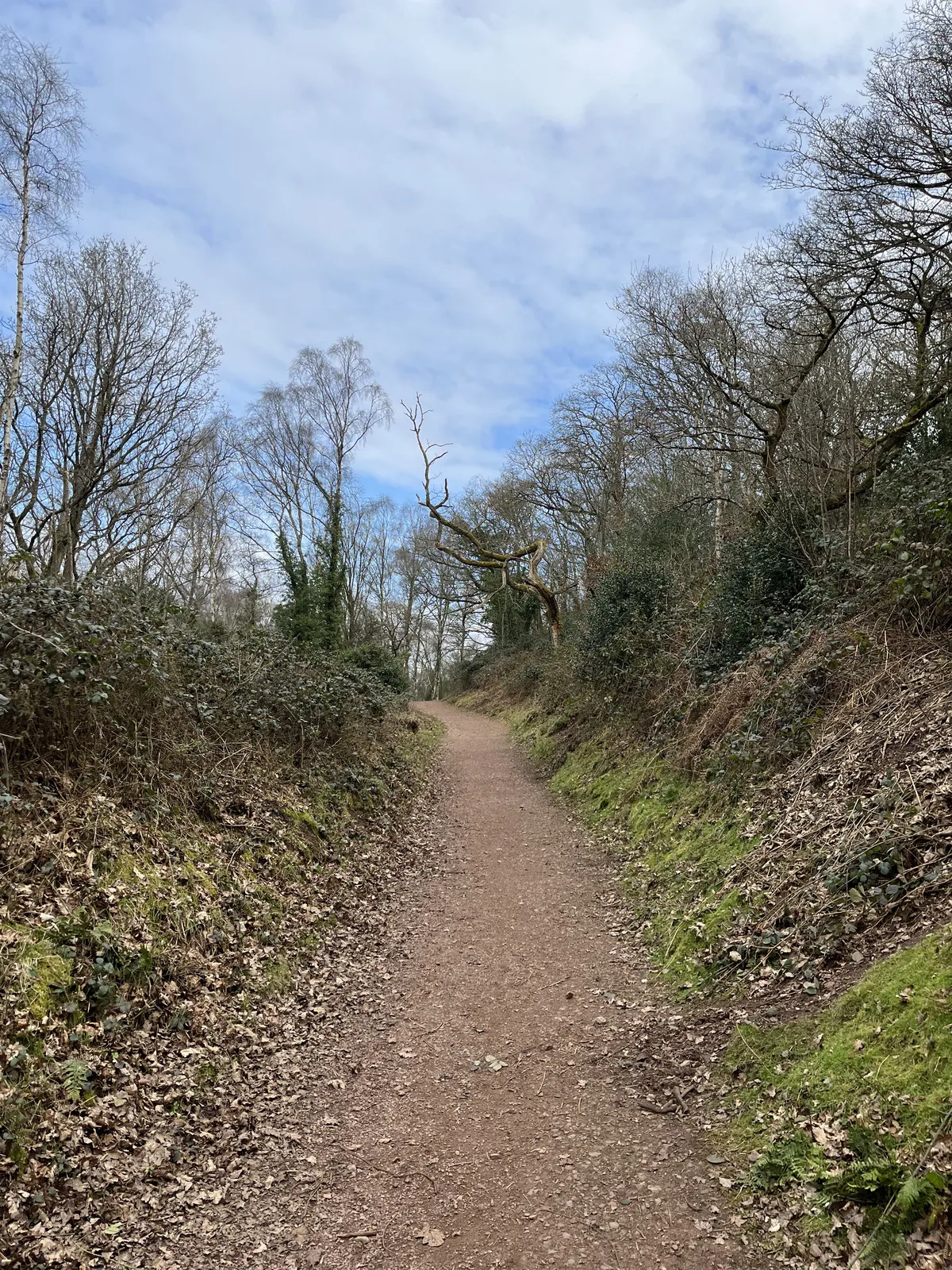
View along a path at Kinver Edge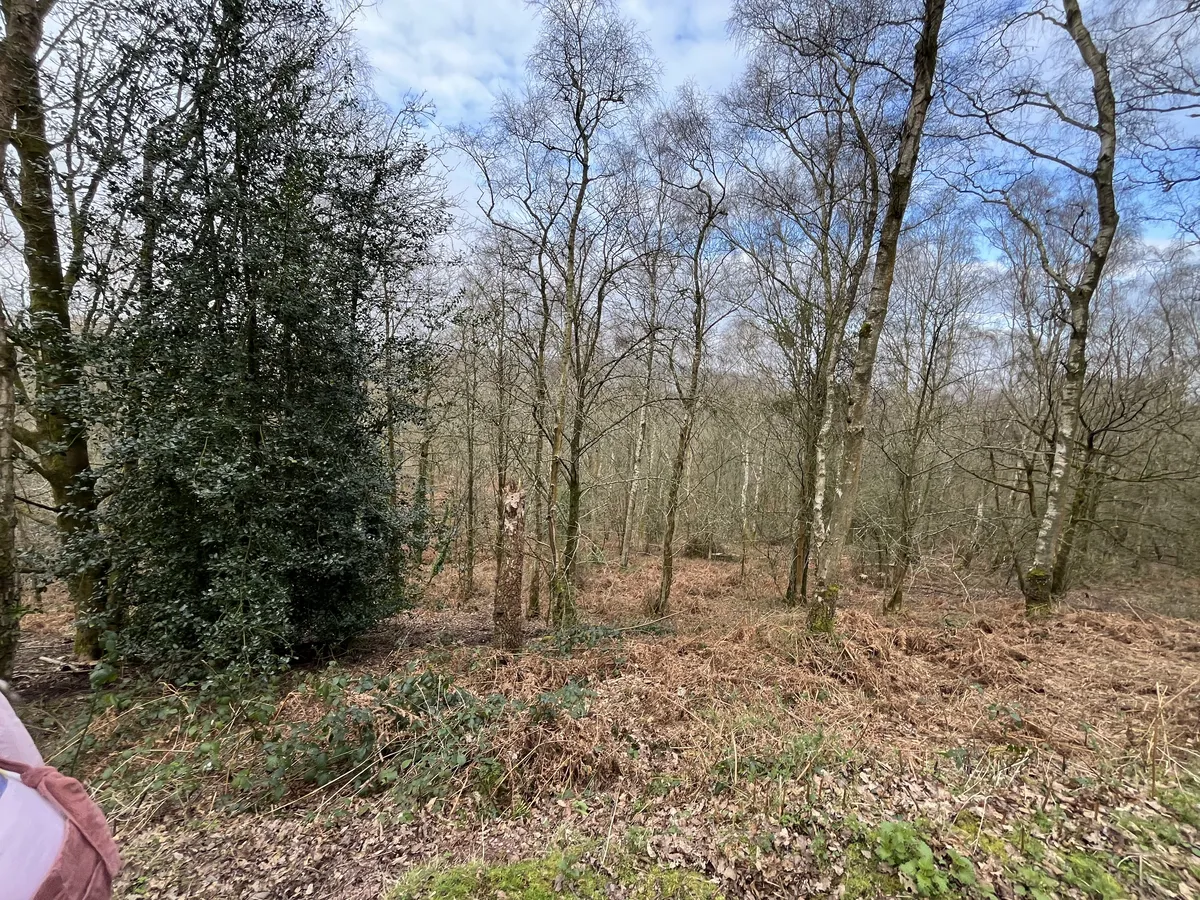
View across the heath
The ancient iron age hill fort at the top of Kinver Edge is well worth the short trek! On a clear day like the day we went you can literally see miles in every direction and there is even a handy reference map provided by the local Rotary Club.
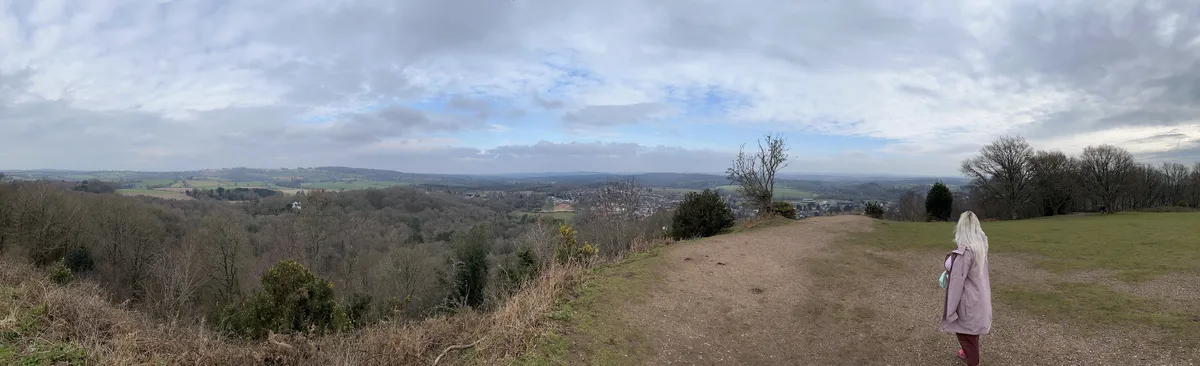
Panoramic view across the West Midlands
Once we'd had enough of the view we continued down the orange path which us towards the Rock Houses themselves. We paid our entrance fees of £7.50 each then meandered along a path around the base of the Rock Houses.
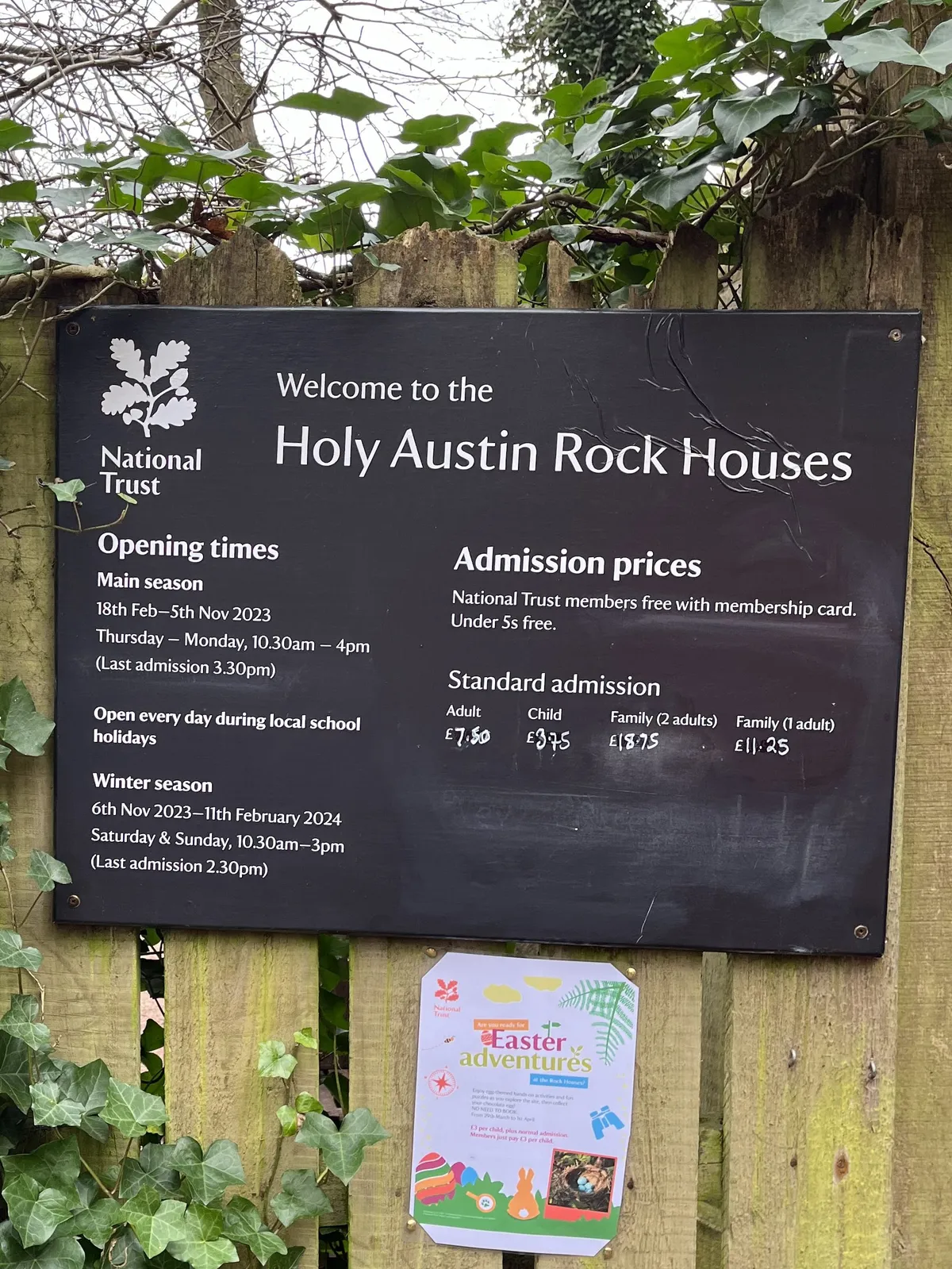
Information signboard for Holy Austin Rock Houses detailing opening times and admission prices
From Steve we learned some of the history of the rock houses, the conditions they lived in and that the second house on the lower level is closed off during winter due to a colony of bats taking up residence. The last human residents moved out as late as 1963!
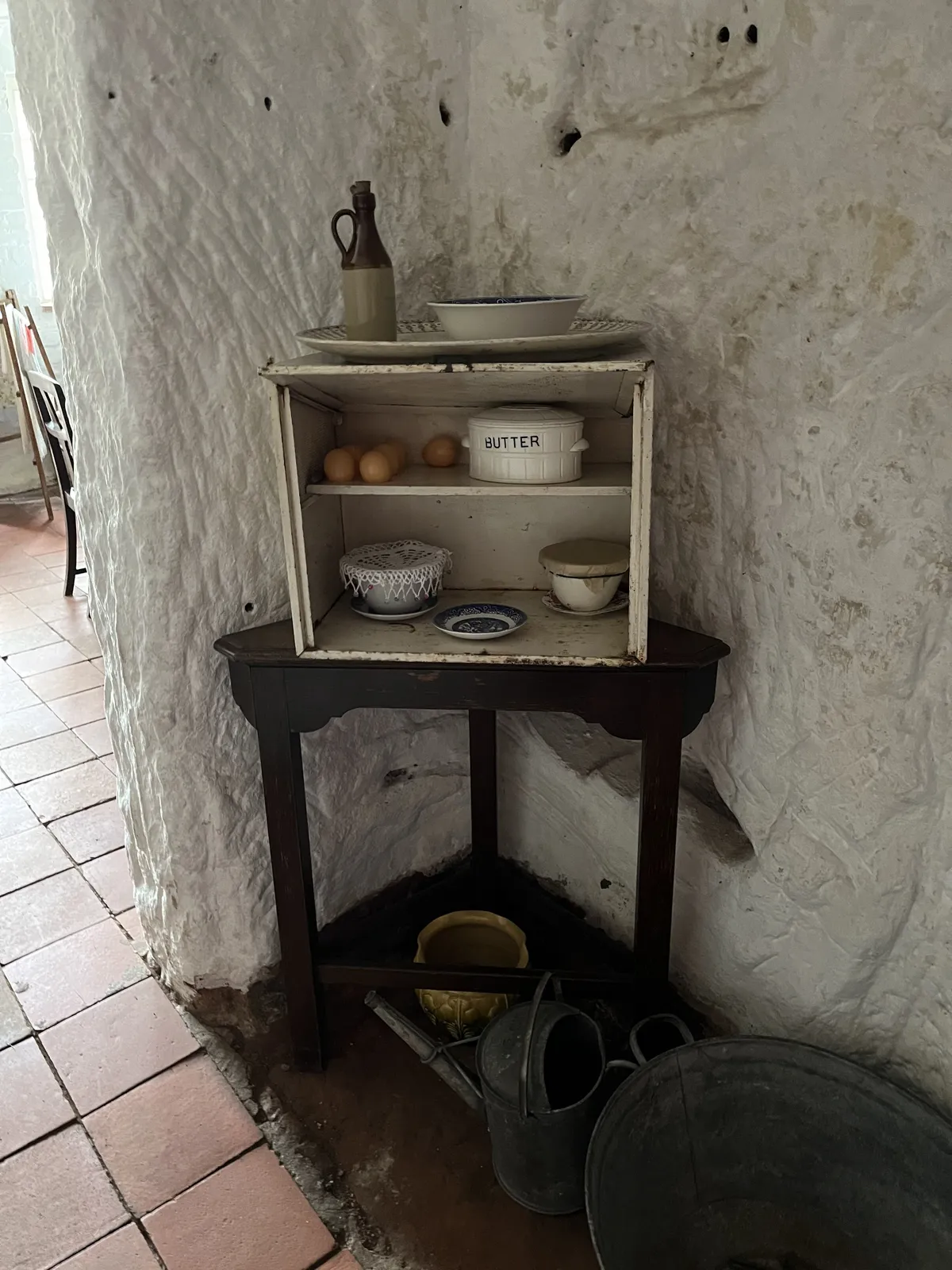
View inside the 1930s living arrangements showing the pantry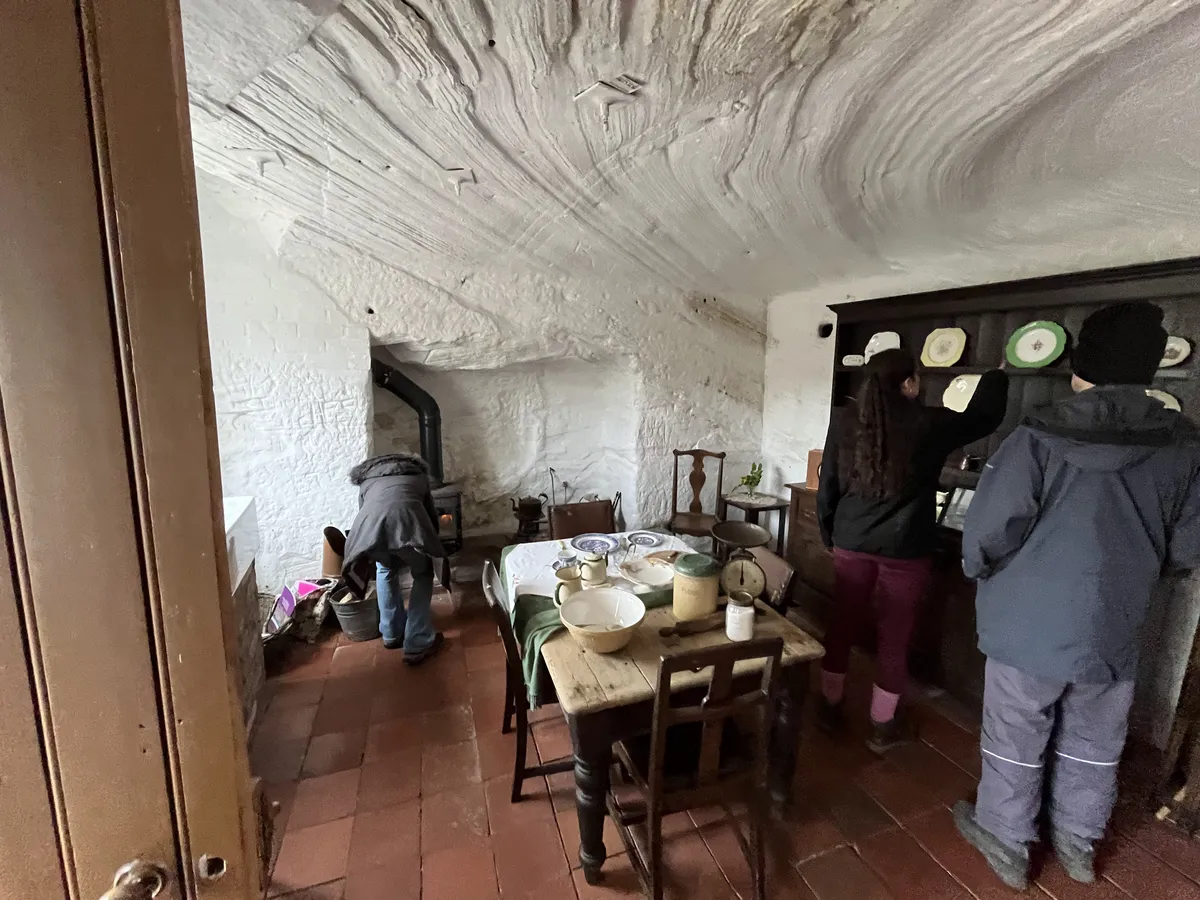
View inside the 1930s living arrangements showing the kitchen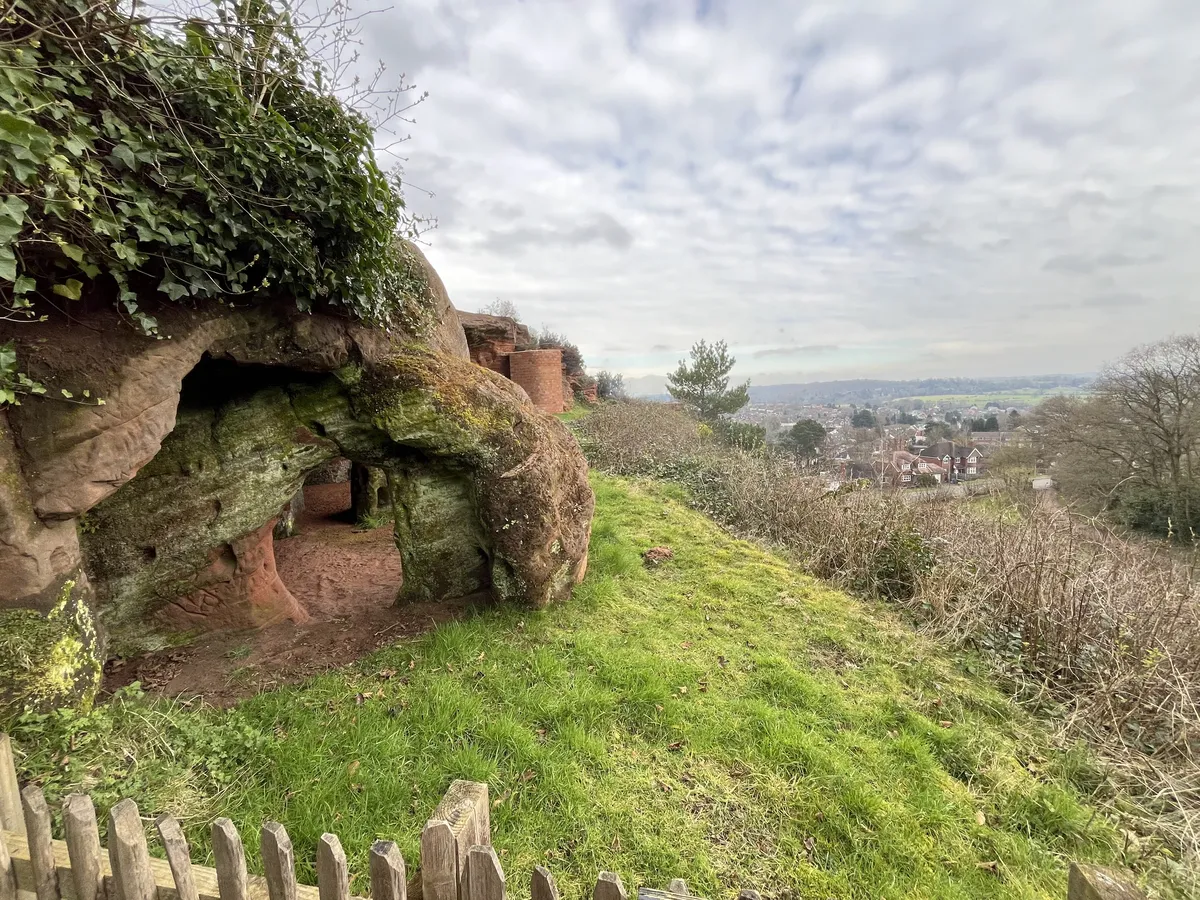
View from the top of the Rock Houses looking over a natural balcony towards the Black Country
In years gone by industries thrived in this area so people moved in. As those fortunes waned, a tea rooms was opened I suppose as a means to survive. There was even a tram link to nearby Amblecote to bring in the sightseeers (and freight) which operated between 1901 and 1930.
We didn't try the modern day tea rooms as it was 11am and we just weren't hungry so no reviews of that. However it was still early so we carried on to nearby Bewdley for lunch and a mooch about but that's for a different blog post.